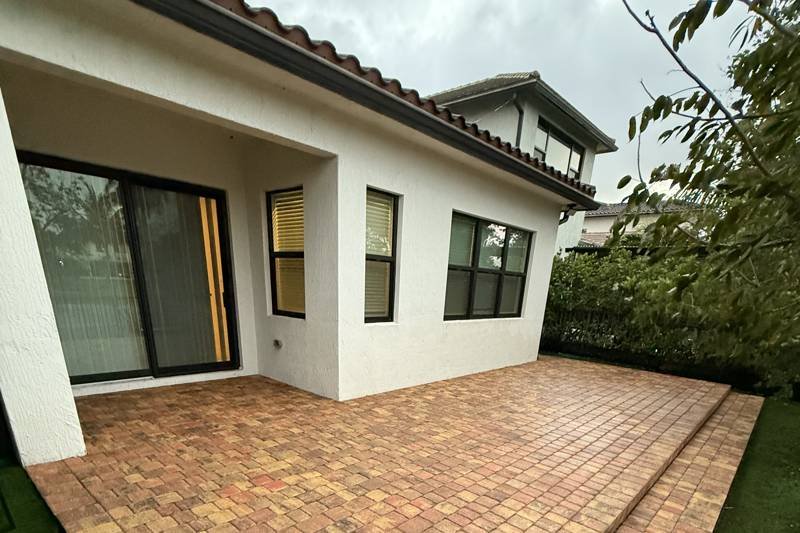
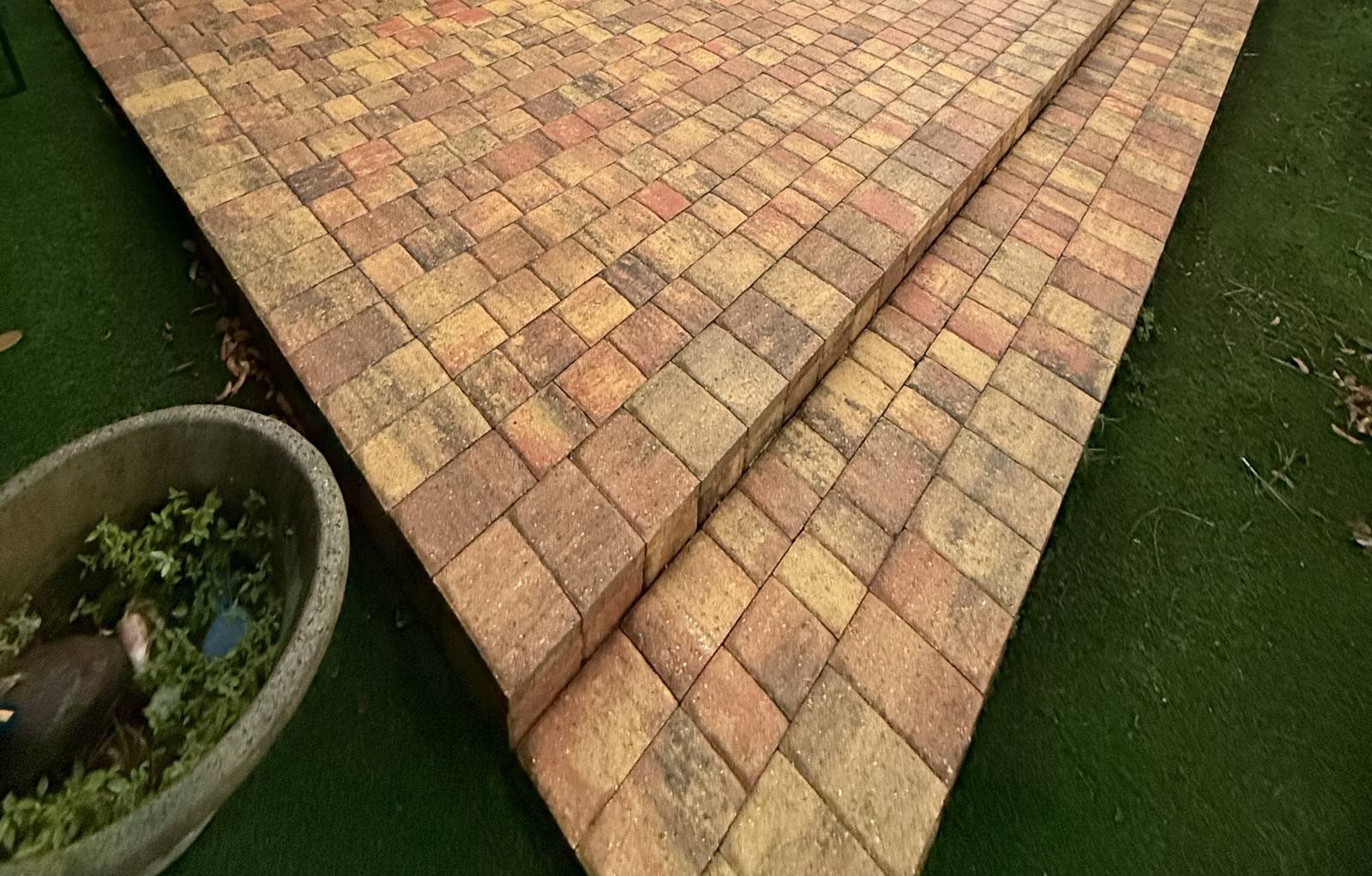
Paver patios, driveways and pool areas are everywhere in South Florida. They’re durable and attractive, but our humid climate is hard on them. With a little regular care, pavers can look good for many years.
What makes pavers look worn
- Mildew and algae that turn pavers dark or green, especially in shade
- Weeds and grass growing in the joints
- Lost joint sand that lets pavers shift or rock
- Stains from leaves, rust, oil, grills and planters
- Fading from constant sun exposure
Everyday care
- Sweep regularly so leaves and debris don’t sit and stain.
- Move planters and furniture now and then so water doesn’t pool underneath.
- Adjust sprinklers so they water the lawn rather than the patio.
- Clean up spills, grease and rust spots promptly.
- Pull weeds from joints before they spread.
Periodic deep cleaning
Even with good habits, pavers in a humid climate will build up grime and growth that sweeping can’t remove. A professional pressure cleaning lifts that buildup from the surface and the joints. Technique matters: the goal is to clean the pavers without blasting out too much joint sand or damaging the surface.
After cleaning: check the joints
Cleaning can remove some loose joint sand. Topping up the joints helps keep pavers locked in place and discourages weeds. Some homeowners also choose to seal their pavers after cleaning; if you’re considering that, ask about products suited to Florida’s sun and humidity.
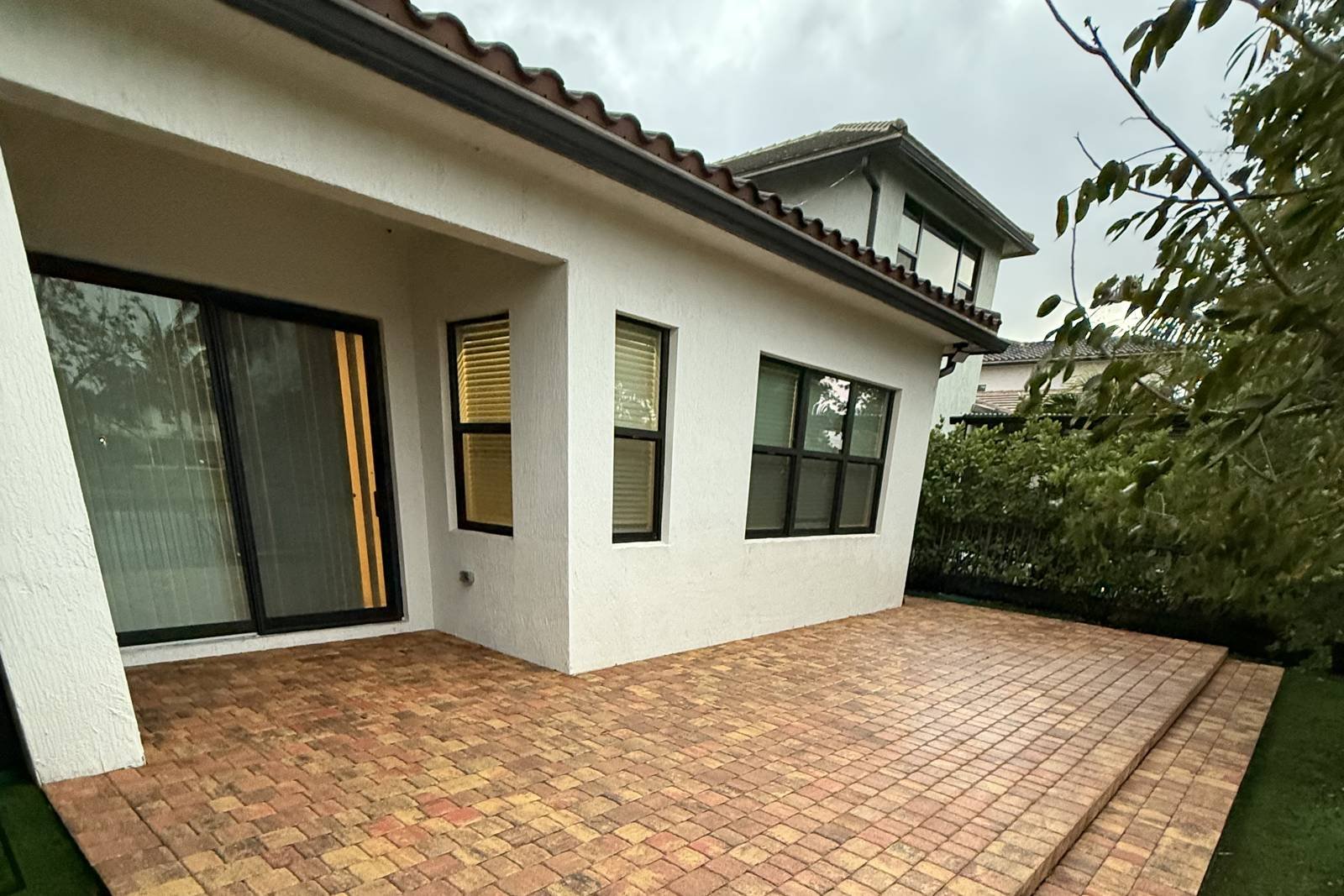
How often?
Most paver patios benefit from a deep cleaning about once a year, or more often in heavy shade or near pools and irrigation. If your pavers look dark, feel slippery or have weeds pushing through, it’s time.
Get your pavers cleaned
CNC Property Services pressure cleans patios, driveways and walkways across South Florida. Request a free quote or call (954) 253-2297.